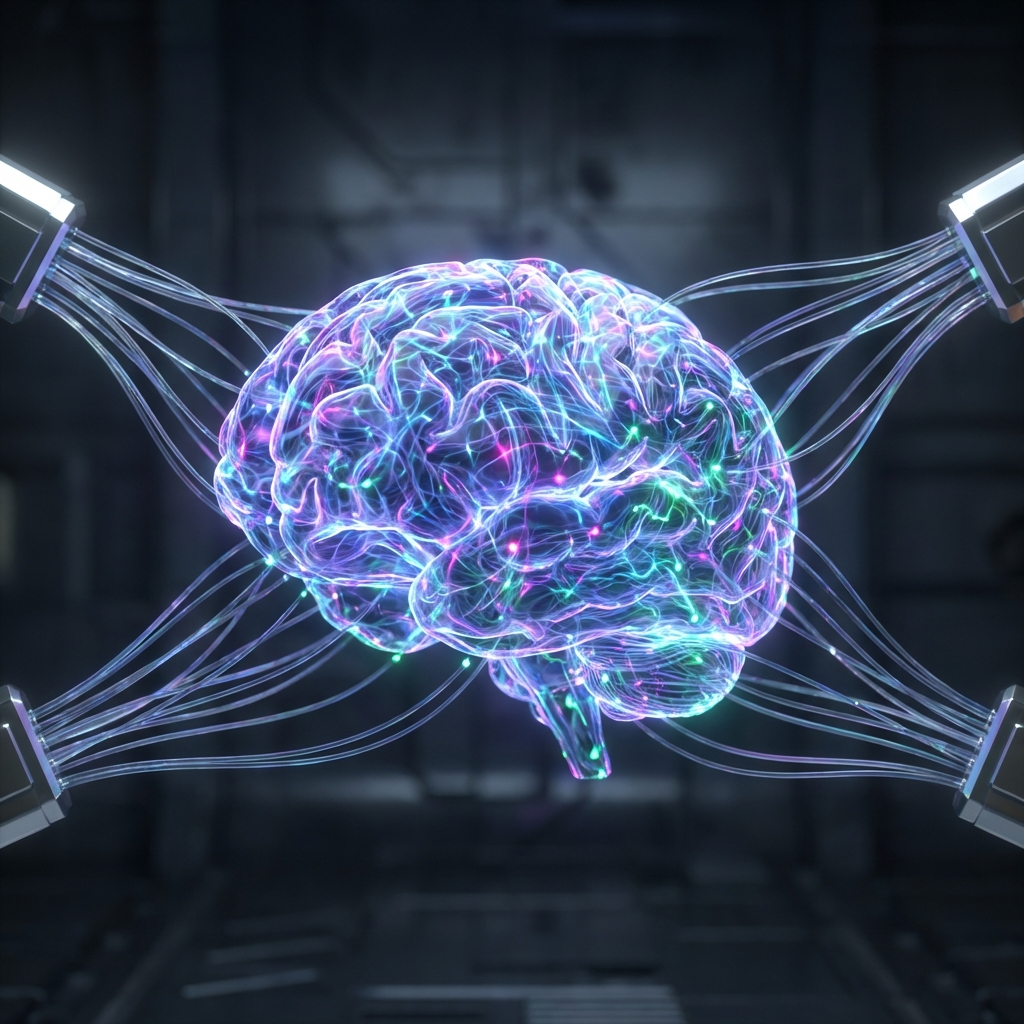
The human brain is often described as the most complex object in the known universe. With 86 billion neurons and trillions of synapses, its processing power is staggering. Yet, the mechanism of consciousness—the subjective experience of "being"—remains one of the greatest mysteries in science. While traditional neuroscience views the brain as a classical biological computer, a provocative group of physicists and neuroscientists suggests we need to look deeper: into the quantum realm.
The Orch-OR Theory
One of the most famous (and controversial) theories in this field is the Orchestrated Objective Reduction (Orch-OR) theory, proposed by Nobel laureate Sir Roger Penrose and anesthesiologist Stuart Hameroff. They suggest that consciousness originates from quantum vibrations in "microtubules"—tubular structures within neurons that provide structural support.
According to Orch-OR, these microtubules act as quantum computers, maintaining "superposition" (being in multiple states at once) until a threshold is reached, at which point the quantum state collapses into a single classical state. This collapse, they argue, results in a moment of conscious experience.
Quantum Effects in Biology
For a long time, the scientific community was skeptical of quantum biology. The brain is "warm, wet, and noisy"—conditions that typically destroy delicate quantum states. However, we now know that nature has evolved to exploit quantum effects in other areas:
- Photosynthesis: Plants use quantum coherence to transport energy with near-100% efficiency.
- Avian Navigation: Some birds may use quantum entanglement in their eyes to "see" the Earth's magnetic field.
If a blade of grass can use quantum mechanics, why couldn't the human brain?
Implications for AI
If consciousness is a quantum phenomenon, it has massive implications for Artificial Intelligence. Current digital computers are strictly classical. If Orch-OR or similar theories are correct, a silicon-based computer might never be truly "conscious," no matter how much data it processes. We would need quantum computers to bridge the gap between calculation and sentience.
Conclusion
While the evidence for quantum cognition is still being gathered, it offers a fascinating bridge between the laws of physics and the enigma of the mind. Whether we are "quantum souls" or classical machines, the search for the answer is redefining the boundary of what it means to be alive.