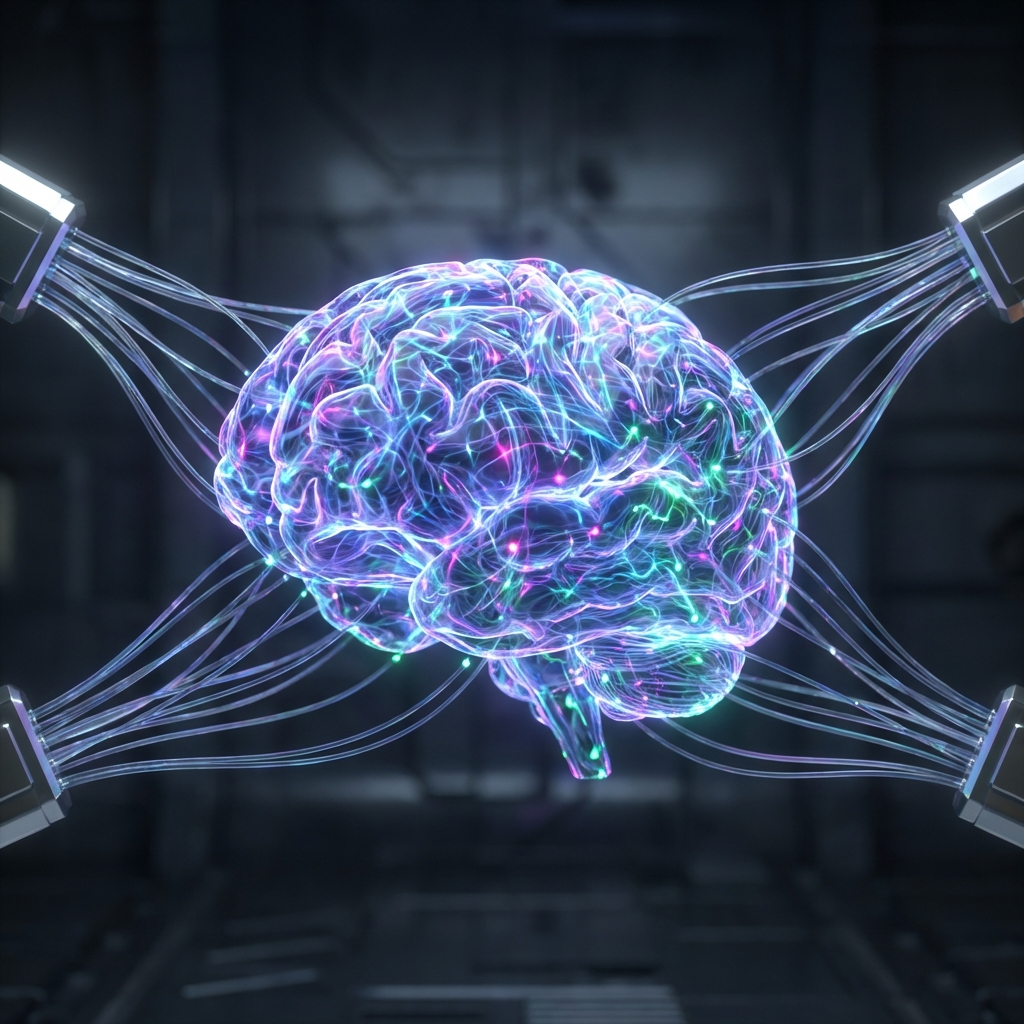
The human brain is often described as the most complex structure in the known universe. With roughly 86 billion neurons and an estimated 100 trillion synaptic connections, understanding its inner workings has been the holy grail of biology for centuries. Yet despite decades of research, we remain remarkably ignorant about how this three-pound organ gives rise to consciousness, memory, creativity, and the very essence of what makes us human.
However, we are now standing on the precipice of a new era in neuroscience—one where the boundaries between biological mind and digital machine are becoming increasingly blurred. Advances in imaging technology, genetic engineering, and artificial intelligence are converging to give us unprecedented insight into the brain's architecture and function. In this article, we'll explore the most promising frontiers of neuroscience and examine what they mean for the future of humanity.
1. Mapping the Human Connectome: The Brain's Wiring Diagram
One of the most ambitious projects in modern science is the Human Connectome Project, launched in 2009 by the National Institutes of Health. Much like the Human Genome Project mapped our DNA, the Connectome Project aims to create a comprehensive map of every neural connection in the human brain. This "wiring diagram" could revolutionize our understanding of mental health disorders, intelligence, and consciousness itself.
The project uses advanced imaging techniques including diffusion MRI, which tracks the movement of water molecules along white matter tracts, and functional MRI (fMRI), which measures blood flow to identify active brain regions. By combining these approaches, researchers can map both the structural connections (the physical wires) and functional connections (which regions communicate during specific tasks).
Key Finding: Early results have shown that "wiring" patterns are unique to individuals, acting almost like a neural fingerprint. These patterns are more predictive of cognitive abilities than brain size or any single region's activity.
By understanding how different regions of the brain communicate, scientists hope to pinpoint the physical roots of conditions like schizophrenia, autism, and Alzheimer's disease. For example, research has identified that depression is associated with weakened connections between the prefrontal cortex (responsible for decision-making) and the amygdala (the brain's emotional center). This finding suggests that treatments targeting these specific circuits—whether through medication, stimulation, or behavioral therapy—could be more effective than current broad-spectrum approaches.
2. Brain-Computer Interfaces: From Science Fiction to Reality
Perhaps the most Science Fiction-esque development in modern neuroscience is the rise of Brain-Computer Interfaces (BCIs). These devices create direct communication pathways between the brain and external devices, translating neural activity into digital commands and vice versa. What seemed impossible just two decades ago is now helping paralyzed patients regain independence.
Current Applications
- Restoring Mobility: Paralysis patients are controlling robotic limbs with their thoughts. In 2023, researchers at Stanford demonstrated a BCI that allowed a paralyzed man to walk naturally by decoding his intentions and stimulating his spinal cord.
- Communication: "Locked-in" patients—those fully conscious but unable to move or speak—are typing on computers using only their minds. A 2022 study showed a patient with ALS communicating at 62 words per minute, approaching conversational speed.
- Sensory Restoration: Cochlear implants have restored hearing to over 700,000 people worldwide. Visual prosthetics are following suit, with early devices allowing blind patients to perceive light patterns and simple shapes.
The Major Players
Neuralink, founded by Elon Musk, is developing high-bandwidth BCIs using thousands of flexible electrodes implanted by a surgical robot. Their 2024 demonstration showed a monkey playing video games telepathically. Synchron, a competitor, takes a less invasive approach using stent-like electrodes inserted through blood vessels, avoiding open-brain surgery. Meanwhile, academic institutions are developing non-invasive alternatives using improved EEG and fMRI techniques.
While current technology is focused on medical restoration, the long-term implications suggest a future where humans might merge with AI to keep pace with digital intelligence. Musk has suggested that BCIs could eventually allow "consensual telepathy"—direct thought transmission between individuals—and even backup human consciousness digitally. These applications remain speculative, but the trajectory of the technology makes them worth serious consideration.
3. Optogenetics: Controlling the Brain with Light
Optogenetics is a revolutionary technique that allows researchers to control specific neurons using light. The method involves introducing genes from light-sensitive algae into targeted brain cells, making them responsive to specific wavelengths of light. This enables scientists to turn neurons on or off with millisecond precision—far faster than drugs and far more specific than electrical stimulation.
This level of control is unprecedented in neuroscience. In animal models, researchers have used optogenetics to implant false memories in mice (making them fear environments they'd never experienced), erase traumatic memories, control motor functions, and even alter social behaviors. A 2019 study demonstrated that activating specific neurons in the hypothalamus could trigger aggressive behavior in normally docile mice, while silencing those same neurons made aggressive mice peaceful.
While human application is still far off due to the need for genetic modification, optogenetics provides an invaluable tool for understanding the causal links between neural activity and behavior. It has already identified specific circuits involved in depression, addiction, and Parkinson's disease, pointing the way toward more targeted treatments. Some researchers are exploring optogenetic-inspired approaches using ultrasound or magnetic fields to achieve similar specificity without genetic modification.
4. Neuroplasticity and Cognitive Enhancement
One of the most hopeful discoveries in recent neuroscience is the extent of neuroplasticity—the brain's ability to reorganize itself by forming new neural connections throughout life. Previously, scientists believed the adult brain was relatively fixed, with limited capacity for change. We now know that the brain remains plastic well into old age, constantly rewiring itself in response to experience.
This plasticity is the basis for learning and memory, but it also means the brain can recover from injury. Stroke victims can reassign functions to healthy brain regions. London taxi drivers develop larger hippocampi (the brain's spatial memory center) from memorizing the city's complex street layout. Musicians show enhanced auditory cortex development. Meditation has been shown to increase gray matter density in just eight weeks.
Understanding neuroplasticity opens the door to cognitive enhancement. Transcranial Direct Current Stimulation (tDCS), which applies weak electrical currents to the scalp, has shown promise for enhancing learning and working memory. Neurofeedback training allows people to learn to control their own brain states. Pharmaceutical approaches targeting neuroplasticity molecules like BDNF (Brain-Derived Neurotrophic Factor) are in development. While "smart pills" remain elusive, the growing understanding of how to optimize brain function is already yielding practical benefits.
5. The Ethical Frontier: Questions We Must Answer
As our ability to read, influence, and potentially enhance the brain grows, we face profound ethical questions. Who owns your neural data? Should cognitive enhancement be available only to those who can afford it, potentially creating a biological divide between rich and poor? If we can decode thoughts, what happens to mental privacy? If we modify our brains, are we still the same person?
These aren't abstract philosophical concerns—they're practical issues that will require regulatory frameworks, international agreements, and societal consensus. The Neuroethics Program at the University of Pennsylvania and similar initiatives worldwide are working to anticipate these challenges, but technology often outpaces policy. As individuals and as a society, we need to engage with these questions now, before the capabilities become widespread.
Conclusion: The Decade of the Brain
The 1990s were declared the "Decade of the Brain," but in many ways, that was premature. We lacked the tools to observe the brain in action or intervene with precision. Today, we stand at a genuinely transformative moment. The convergence of connectomics, brain-computer interfaces, optogenetics, and AI-powered analysis is giving us capabilities that would have seemed like magic just a generation ago.
The future of neuroscience is not just about understanding who we are, but potentially redefining what we can become. We may soon treat previously incurable neurological conditions, restore lost senses and abilities, and perhaps even enhance human cognition beyond its natural limits. But with these powers come responsibilities—to use them ethically, to ensure equitable access, and to preserve what makes us human even as we transcend biological limitations.
One thing is certain: the next few decades will reveal more about the human mind than the entirety of human history preceding them. The question is not whether these discoveries will happen, but how we will choose to use them. As we stand at this threshold, we have both the opportunity and the obligation to shape a future where neuroscience serves human flourishing.
About This Analysis
This article synthesizes current research from peer-reviewed sources including the Human Connectome Project, Neuralink clinical trials, and optogenetics studies from MIT and Stanford. As a neuroscientist actively working in brain-computer interface research, I've attempted to balance scientific accuracy with accessibility, highlighting both the tremendous promise and the genuine uncertainties of these emerging technologies.